Introduction

In 2026, a 2% fluctuation in supply chain costs is the difference between a record year and a deficit.

Yet, when looking at the landscape of small to mid-sized manufacturers and import-export firms, many are still trying to navigate these massive stakes with outdated tools. Most firms are just moving their mess to the cloud. They might have a basic ERP, but they’re still using Excel for the "hard stuff."

As a board member at IAMCP, I see the gap clearly: It's not just about buying a new tool; it's about integration. We don’t just license software; we leverage the entire Microsoft Cloud ecosystem—backed by IAMCP insights—to build resilient, AI-first supply chains that outperform the market.

For small and medium-sized businesses (SMBs), Microsoft Dynamics 365 Business Central is the engine driving this transformation. Here is how Business Central is changing the game by unifying ERP and CRM data, and what the true "Cost of Inaction" looks like for businesses that fail to adapt.


The Resilient Manufacturer: From Reactive to Predictive

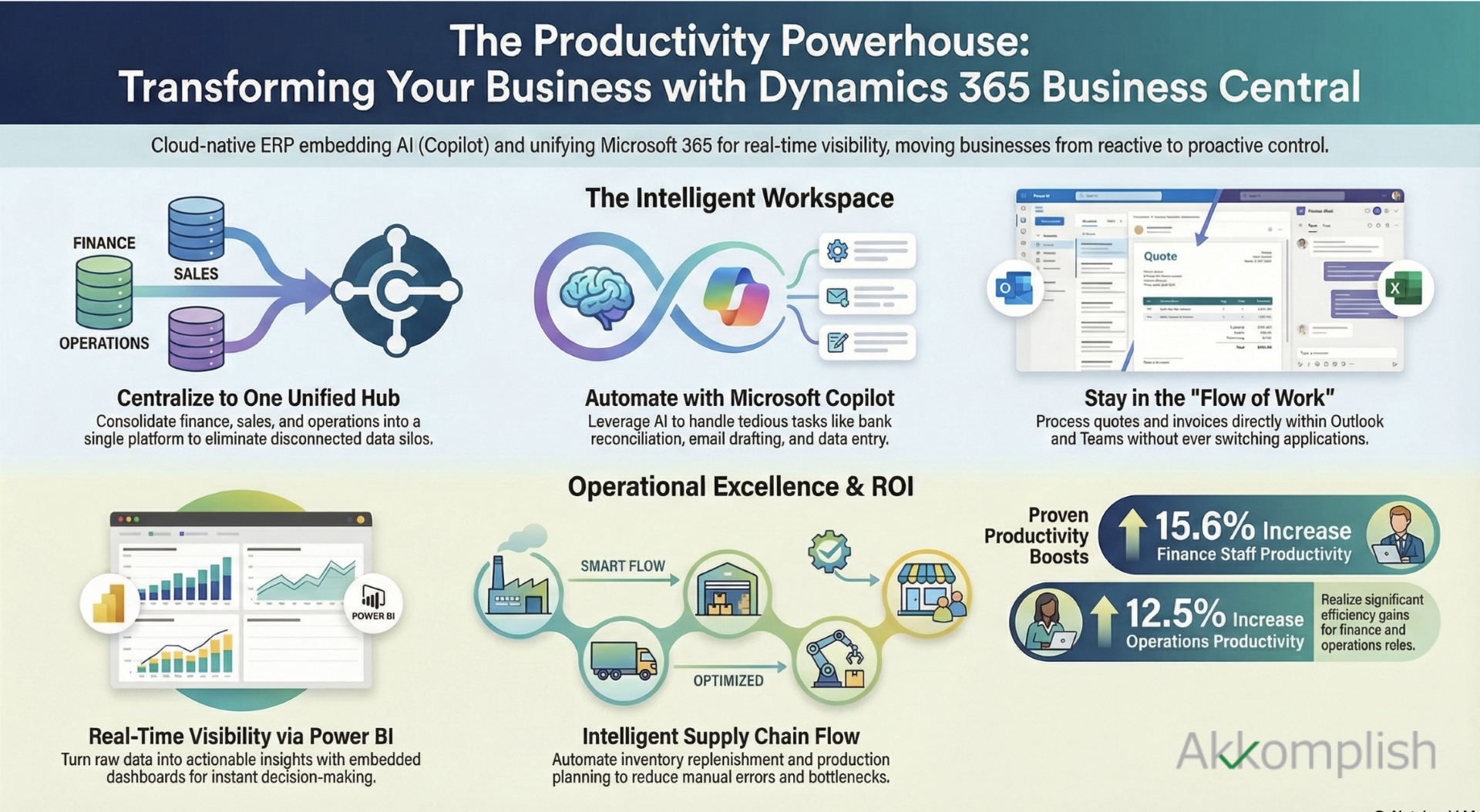
Historically, manufacturing software was a reactive digital filing cabinet. If a machine went down or a part was missing, you found out too late. Today, Business Central helps manufacturers shift from reactive problem-solving (checking spreadsheets) to proactive control (AI-driven demand sensing).

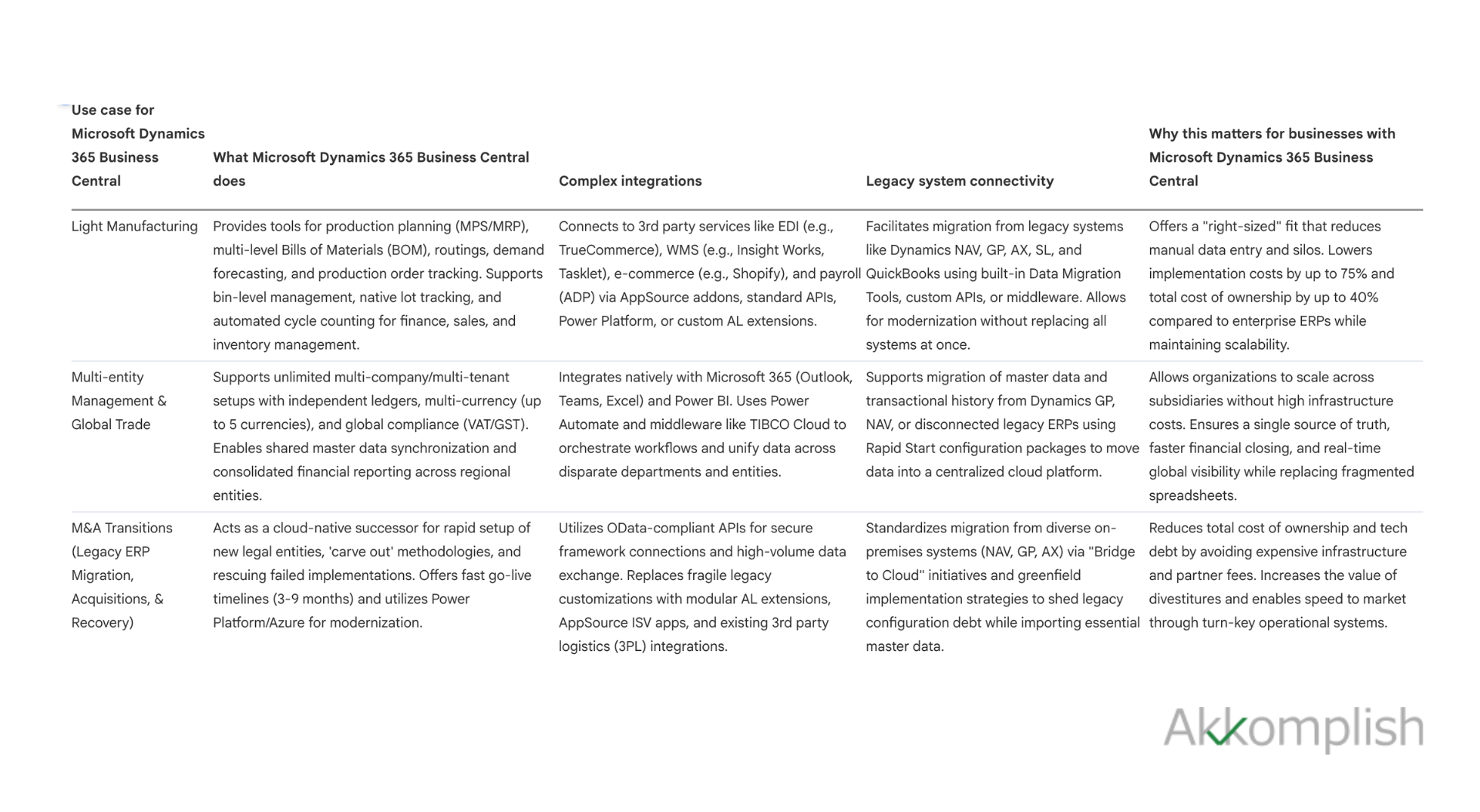
Through built-in tools like the Master Production Schedule (MPS) and Material Requirements Planning (MRP), the system calculates exactly what needs to be produced, and when, based on real-time sales forecasts. But the real game-changer is AI. Imagine a scenario where Copilot in Dynamics 365 identifies a shipment delay in the Suez Canal before the port even reports it, allowing your system to automatically suggest alternate substitute items so your production line never stops.

Because your shop floor is finally talking to your export logistics in real-time, you no longer need to carry 15% more safety stock than you actually need just to cover your blind spots.

The Frictionless Exporter: Compliance as a Competitive Advantage

For import-export companies, cross-border trade brings a massive headache: landed costs and multi-country tax compliance. Compliance isn't a hurdle; it's a competitive advantage.

Are your international margins being eaten by hidden landed costs? Business Central natively tracks complex landed costs—including freight, duty, and brokerage fees—allocating them accurately to the item level. It also supports multi-entity setups, allowing businesses to seamlessly manage operations across different countries and currencies within a unified system. By automating these multi-country tax and landed cost calculations, import-export firms are saving up to 40 hours of manual data entry per week.

The Beginner-Friendly Workflow: How It Actually Works

So, how does a business actually use this in their day-to-day operations? The workflow is designed to be intuitive, ensuring a low barrier to entry for your team:

Intelligent Order Capture

A customer emails a complex, unstructured purchase request. Instead of a human manually typing SKUs into a system, the AI-powered Sales Order Agent reads the email, locates the customer in Business Central, and automatically generates a draft sales order for review.

Automated Production Planning

Once the order is confirmed, the system looks at the Bill of Materials (BOM) and Routing instructions. It instantly checks real-time inventory levels across all your warehouses and bins.

Execution and Tracking

If materials are missing, the system generates data-driven purchasing suggestions. Your shop floor workers follow the routing steps, logging labor time and material consumption in real time, eliminating outdated manual job cards.

Frictionless Invoicing

When vendor invoices arrive for the raw materials, the Payables Agent uses AI to analyze the PDF invoice and match it against the purchase order, staging it for final human approval.

Practical Examples in Action

The Metal Fabricator

A custom metal fabrication company uses Business Central to schedule CNC machines more efficiently. By utilizing bin-level tracking and lot tracking, they trace raw materials precisely, reducing waste and ensuring strict ISO compliance.

The Global Distributor

A wholesale distributor running operations in the US and Canada utilizes Business Central's multi-entity capabilities. They automatically calculate the exact landed costs of goods arriving from overseas, ensuring their profit margins remain completely transparent at both the order and customer level.

Conclusion: Stop Digitizing the Past

The "Cost of Inaction" for manufacturers and exporters who haven't unified their ERP and CRM data is staggering. Relying on disconnected systems leads to inventory bloat, delayed fulfillment, and lost capital.

Most manufacturers are struggling with the same ghost: a lack of unified visibility. True industry leaders are using Dynamics 365 to create a "Digital Twin" of their entire export and manufacturing operation. By embracing a system that provides out-of-the-box AI agents, automated compliance, and real-time inventory visibility, small and mid-sized businesses can finally punch above their weight class.

Stop digitizing the past. Start predicting the future.

GET A FREE QUOTE

Please fill this form and we'll get back to you as soon as possible!

TOP